Студопедия Главная Случайная страница Обратная связь

Разделы: Автомобили Астрономия Биология География Дом и сад Другие языки Другое Информатика История Культура Литература Логика Математика Медицина Металлургия Механика Образование Охрана труда Педагогика Политика Право Психология Религия Риторика Социология Спорт Строительство Технология Туризм Физика Философия Финансы Химия Черчение Экология Экономика Электроника

PROCEDURE


ACTIVITY

Whole class: speaking

Mill drill (For detailed instructions and advice on using mill drills, see the notes for teachers at the beginning of the Resource Pack.)

AIM

To speak to as many partners as possible, asking what people would like and making polite requests.

GRAMMAR AND FUNCTIONS

Offers and requests

Would like

Asking and saying how much things cost

VOCABULARY

Food and drink

PREPARATION

Make one copy of the worksheet for each group of up to ten students. Cut the worksheet up into cards, being careful to cut and fold as indicated. You will need to keep one card for yourself to demonstrate the activity.

TIME

15 minutes

PROCEDURE

1 As this is a controlled practice activity, it is essential that
the students are familiar with the vocabulary before doing
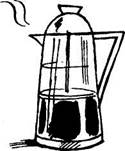
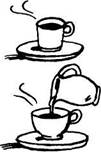
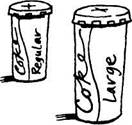
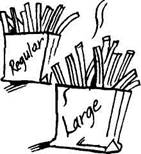
the mill drill. It is a good idea to use the pictures on the
mill drill cards to revise or pre-teach the vocabulary the
students will need for this activity:

Food and drink Choice of size, flavour, etc

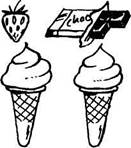
an ice cream strawberry or chocolate?

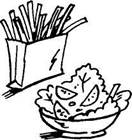
some french fries regular or large?

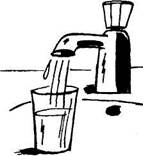
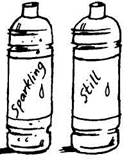
some water or sparkling or still?

a glass of water

some coffee or black or white?

a cup of coffee

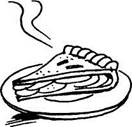
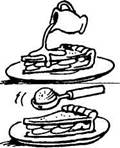
some apple pie or with cream or ice cream?

apiece of apple pie

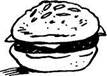
a burger with fries or salad?

a Coke regular or large?

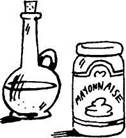
a salad with vinaigrette or mayonnaise?

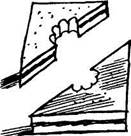
a sandwich (with) white or brown bread?

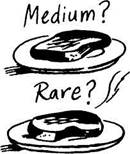
a steak medium or rare?

2 If there are more than ten students in the class, divide
them into groups. Give one folded picture card to each
student in the class. Keep one for yourself.

3 Make sure each student knows how to say the food or
drink shown in the picture on their card. In particular,
make sure they know which article to use (a, an or some).

4 Tell the students that they are going to ask for the food or
drink shown on their cards. Write an example dialogue on
the board, indicating the language the students should use.
For example:

Student A: Can I help you?

Student B: I'd like an ice cream, please.

Student A: Would you like strawberry or chocolate?

Student B: Chocolate, please.

5 Demonstrate the activity with individual students, using
the card you kept for yourself. Tell the students to hold
their cards so that the picture showing the food or drink is
facing them and the picture showing the choice of size,
flavour, etc is facing their partner. Ask several pairs of
students to demonstrate the activity to the whole class,
using their pictures as prompts.

6 Now ask the students to go round the class or group making
requests and offering choices with as many different
partners as possible, using their picture cards as prompts. In
this part of the activity, the students request the same food
or drink, but offer different sizes, flavours, etc.

7 When the students have finished, ask them to exchange
cards and to go round the class or group again, this time
holding their cards the other way round so that the picture
showing the food or drink is facing their partner and the
picture showing the choice of size, flavour, etc is facing
themselves. In this part of the activity, the students ask for
different food or drink each time they change partner.

8 The students continue making requests and offering
choices in this way until they have spoken to as many
different partners as possible.

OPTION

You can extend the dialogue so that the students practise asking and saying how much things cost. Before they start the activity, ask them to write the price of the food or drink on the part of the card showing the choice of size, flavour, etc. You can help them to decide how much these things usually cost. When all the students have done that and you have checked that they have put an appropriate price on their cards, follow the procedure as above, adding the following lines to the sample dialogue:

Student A: Here you are.

Student B: Thank you. How much is that?

Student A: That's 99p.

Alternatively, the students can practise this three-line dialogue in a separate mill drill. Cut off the part of the cards showing the choice of size, flavour, etc and use the pictures of food and drink as mill drill cards. Ask the students to write the price of the food or drink shown on their cards on the blank side. Follow the procedure for a mill drill with students holding the cards with the pictures of food and drink facing them and the price facing their partner for the first part of the activity, and then holding the cards the other way round for the second part of the activity.


<== предыдущая лекция | следующая лекция ==>
Restaurants. Read the following texts carefully. | A head of

Дата добавления: 2015-09-04; просмотров: 465. Нарушение авторских прав; Мы поможем в написании вашей работы!


Обзор компонентов Multisim Компоненты – это основа любой схемы, это все элементы, из которых она состоит. Multisim оперирует с двумя категориями...


Композиция из абстрактных геометрических фигур Данная композиция состоит из линий, штриховки, абстрактных геометрических форм...


Важнейшие способы обработки и анализа рядов динамики Не во всех случаях эмпирические данные рядов динамики позволяют определить тенденцию изменения явления во времени...


ТЕОРЕТИЧЕСКАЯ МЕХАНИКА Статика является частью теоретической механики, изучающей условия, при ко­торых тело находится под действием заданной системы сил...

Влияние первой русской революции 1905-1907 гг. на Казахстан. Революция в России (1905-1907 гг.), дала первый толчок политическому пробуждению трудящихся Казахстана, развитию национально-освободительного рабочего движения против гнета. В Казахстане, находившемся далеко от политических центров Российской империи...

Виды сухожильных швов После выделения культи сухожилия и эвакуации гематомы приступают к восстановлению целостности сухожилия...

КОНСТРУКЦИЯ КОЛЕСНОЙ ПАРЫ ВАГОНА Тип колёсной пары определяется типом оси и диаметром колес. Согласно ГОСТ 4835-2006* устанавливаются типы колесных пар для грузовых вагонов с осями РУ1Ш и РВ2Ш и колесами диаметром по кругу катания 957 мм. Номинальный диаметр колеса – 950 мм...

Решение Постоянные издержки (FC) не зависят от изменения объёма производства, существуют постоянно...

ТРАНСПОРТНАЯ ИММОБИЛИЗАЦИЯ   Под транспортной иммобилизацией понимают мероприятия, направленные на обеспечение покоя в поврежденном участке тела и близлежащих к нему суставах на период перевозки пострадавшего в лечебное учреждение...

Кишечный шов (Ламбера, Альберта, Шмидена, Матешука) Кишечный шов– это способ соединения кишечной стенки. В основе кишечного шва лежит принцип футлярного строения кишечной стенки...

Studopedia.info - Студопедия - 2014-2026 год . (0.012 сек.) русская версия | украинская версия